
Water Conditions for Trout & Char in Alaska
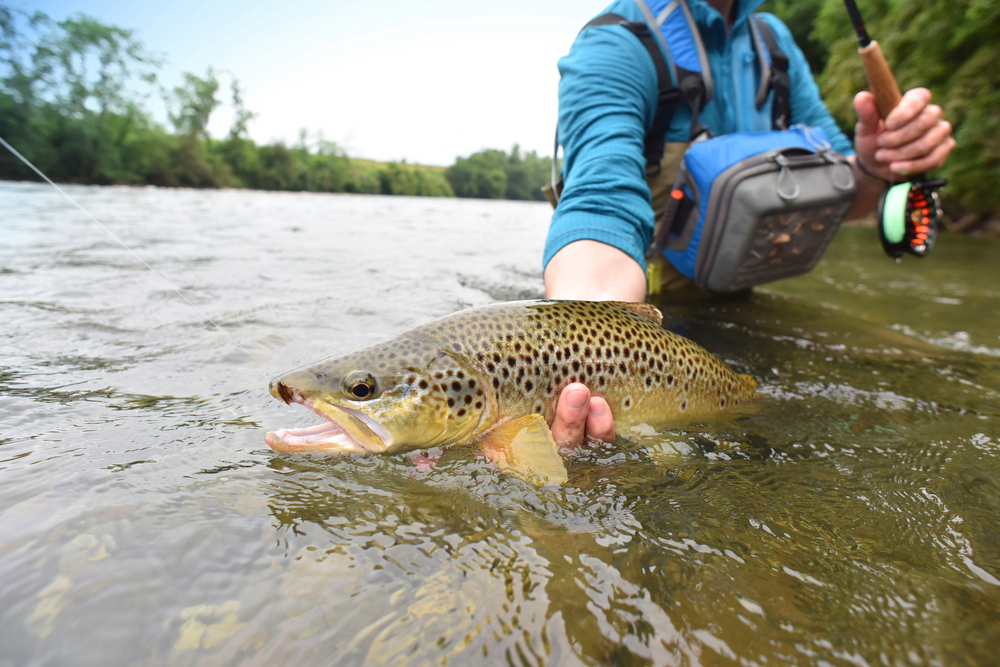
Alaska’s trout and char fisheries are shaped by cold water, seasonal runoff, salmon activity, and the conditions of each individual river system. Around Kenai and across Southcentral Alaska, knowing what the water is doing can be just as important as choosing a fly or lure.
The most productive conditions for trout and char are generally cold, adequately oxygenated water with enough clarity for fish to locate food. But Alaska anglers also need to account for snowmelt, glacier-fed water, rainfall, changing river levels, and seasonal salmon runs. Rather than looking for one “perfect” temperature or river level, pay attention to how conditions are changing and how fish respond.
What local anglers should know
-
Rising or falling water can change where trout and char hold, feed, and find relief from current.
-
Glacier-fed rivers and clear-water tributaries around the Kenai Peninsula can behave very differently even on the same day.
-
Rainfall and snowmelt can quickly affect water level, clarity, current speed, and accessibility.
-
Salmon runs can reshape trout and char feeding opportunities as eggs and other food sources become available.
-
Conditions observed at one access point should not automatically be assumed to represent an entire watershed.
Why Do Water Conditions Matter for Trout and Char in Alaska?
Water conditions matter for trout and char in Alaska because temperature, clarity, flow, and available food influence where these fish hold and how actively they feed. Around Kenai, anglers may encounter everything from relatively clear tributaries to larger systems affected by runoff, rainfall, and glacial influence.
Trout and char are cold-water fish, but temperature is only part of the picture. Current strength affects how much energy a fish must spend holding in a particular location. Visibility affects feeding opportunities. River level can open new holding water or make previously productive areas less appealing.
Southcentral Alaska also experiences pronounced seasonal changes. Conditions around the Kenai River, Kasilof River, Cook Inlet drainage, and smaller Kenai Peninsula waters can shift substantially as spring runoff gives way to summer fishing and eventually colder fall conditions.
Alaska West Air Inc serves anglers traveling into Alaska fisheries where access and local conditions can play a major role in trip planning. From here forward, we focus on helping readers understand the factors worth watching rather than promising that any particular set of conditions will produce fish.
What Local Water Conditions Should Anglers Monitor?
Local anglers should monitor water temperature, river level, flow trend, clarity, recent precipitation, and seasonal fish activity before deciding how and where to fish. No single measurement tells the entire story, particularly across the varied waters of the Kenai Peninsula and greater Southcentral Alaska.
Public river gauges and weather information can help establish whether water is rising, falling, warming, or cooling. The National Weather Service and U.S. Geological Survey are useful public sources for weather, streamflow, and water-condition information where monitoring stations are available.
Those readings still require context. A gauge represents a specific monitoring location, while an angler may be fishing miles away or on a tributary with different characteristics. Treat public data as part of the decision, then compare it with conditions you actually encounter.
How Do Changing Water Levels Affect Alaska Trout and Char?
Changing water levels affect Alaska trout and char by altering current speed, available holding areas, shoreline habitat, and the places where food travels through the river. A productive location under stable flow may fish very differently after substantial rain or during a rapid rise or drop.
Higher water can increase current and reduce visibility. It may also create or expand softer-current areas along banks, behind structure, and near current seams. Lower water can concentrate flow and make some holding areas shallower or more exposed.
On rivers around Kenai, anglers should pay attention to the trend rather than simply labeling the river “high” or “low.” A rapid change may require a different approach than a river that has remained at a similar level for several days.
What Are the Warning Signs of Difficult or Unsafe Water Conditions?
Warning signs include rapidly rising water, unusually poor visibility, strong current, floating debris, unexpected changes in access, and conditions that exceed an angler’s experience or equipment. Catching fish should always remain secondary to evaluating whether a river can be approached and fished safely.
Watch for:
-
Water rising noticeably during your time on the river.
-
Increased debris moving downstream.
-
Current that makes previously accessible areas difficult to approach.
-
Sudden reductions in visibility following rain or runoff.
-
Banks, gravel bars, or crossings disappearing as water rises.
-
Cold conditions that increase the consequences of getting wet.
-
Weather changes that could affect remote access or return plans.
Alaska’s remoteness makes conservative decisions especially valuable. Conditions that might be an inconvenience close to town can become much more consequential farther from established roads and services.
When Should Anglers Rely on Local Professional Knowledge?
Anglers should rely on local professional knowledge when remote access, unfamiliar rivers, rapidly changing conditions, or trip logistics make personal observation alone insufficient. Public data is useful, but it cannot always tell you exactly what conditions will look like at a specific fishing location.
A river may be fishable in one reach and difficult in another. Tributaries can also differ sharply from nearby main-stem water. For visitors unfamiliar with the Kenai Peninsula or more remote Alaska fisheries, understanding those differences can save valuable fishing time.
Professional trip planning is especially useful when access itself is part of the fishing experience. Weather, aircraft considerations, river conditions, and the characteristics of a destination all need to be considered together.
What Common Conditions Change Trout and Char Fishing in Southcentral Alaska?
The most common conditions changing trout and char fishing in Southcentral Alaska are seasonal runoff, rain, glacial influence, salmon activity, and normal changes in river flow. Each can affect visibility, feeding behavior, access, or where fish concentrate.
Spring and early-season runoff can increase water volume as snow melts. Rain events can raise rivers during summer and fall. Glacier-influenced systems may carry suspended sediment that changes water appearance and visibility.
Salmon are another major seasonal influence. Their movement through Alaska waters changes the food available to resident fish. Trout and char can adjust their feeding locations as salmon activity develops, making seasonal timing an important part of understanding a fishery.
How Can Anglers Prepare for Changing Alaska Water Conditions?
Anglers can prepare by checking recent weather and river information, carrying equipment for variable conditions, and building flexibility into their fishing plans. Around Kenai, a fixed plan can become less useful when rainfall, runoff, wind, or river levels change unexpectedly.
Check conditions as close to departure as practical. Look at trends rather than relying only on one measurement. Prepare for cold water even when the air temperature feels comfortable, and avoid assuming that conditions experienced on a previous Alaska trip will repeat.
For remote trips, flexibility becomes even more important. A destination should be evaluated based on current circumstances rather than expectations created weeks or months earlier.
What Results Can Anglers Expect From Reading the Water?
Reading the water can help anglers make better decisions about where to concentrate their effort, but it cannot guarantee fishing success. Trout and char behavior reflects a combination of water conditions, seasonal food sources, fish movement, weather, and the characteristics of the individual river.
An angler who recognizes current seams, softer holding water, changes in depth, and differences in clarity has more information to work with. That knowledge becomes particularly useful when conditions change during a trip.
The goal is adaptability. Alaska fishing rewards anglers who observe first and adjust rather than forcing one technique or location to work.
What Mistakes Do Anglers Make When Judging Alaska Water Conditions?
Common mistakes include relying on outdated reports, focusing on a single measurement, assuming nearby rivers have identical conditions, and prioritizing fishing plans over safety. Alaska’s large watersheds and rapidly changing weather make current, location-specific observations especially valuable.
Mistake: Using a river report from several days ago as if nothing has changed.
Consequence: Rainfall or runoff may have substantially altered the water.
Better approach: Check recent information and evaluate conditions again upon arrival.
Mistake: Assuming clear water is always better.
Consequence: Anglers may overlook productive water simply because visibility is different from what they expected.
Better approach: Consider clarity alongside flow, food, structure, and fish behavior.
Mistake: Treating every Kenai Peninsula fishery the same.
Consequence: Techniques and expectations may not fit the water being fished.
Better approach: Evaluate the specific river, tributary, or lake and its current conditions.
What Is a Common Kenai-Area Fishing Scenario?
A common Kenai-area scenario is arriving after recent weather has changed a river from the conditions an angler expected when the trip was planned. The water may be higher, lower, less clear, or moving differently, requiring the angler to reassess both fishing locations and techniques.
This is not a case study or a description of a specific Alaska West Air Inc trip. It is simply a realistic example of why flexible planning matters in Southcentral Alaska.
Instead of immediately assuming the fishing will be poor, evaluate what changed. Look for different current speeds, protected holding areas, clearer tributary influence, or other features that may help fish feed efficiently.
How Can Remote Fishing Access Expand Your Options?
Remote fishing access can expand an angler’s options by making fisheries beyond ordinary road access available, subject to weather, logistics, destination conditions, and appropriate trip planning. For anglers based around Kenai, that can create opportunities to experience a broader range of Alaska waters.
We encourage anglers to think about the complete fishing environment rather than focusing only on a destination name. Current water conditions, seasonal timing, access requirements, and weather can all influence the experience.
How Should Anglers Compare Road-Accessible and Remote Fishing Options?
Anglers should compare road-accessible and remote fishing based on access, flexibility, current conditions, logistics, and the type of experience they want. Neither option is automatically better, and conditions around the Kenai Peninsula can make one choice more practical on a particular trip.
Road-accessible fishing may make it easier to change locations during the day. Remote fishing can provide access to waters that cannot be conveniently reached by road, but it requires additional planning and greater attention to weather and logistics.
The better option is the one suited to current conditions, the angler’s experience, and the objectives of the trip.
What Areas Are Relevant to Anglers Based in Kenai?
Anglers based in Kenai are positioned near a diverse Southcentral Alaska fishing region that includes the Kenai Peninsula, Cook Inlet drainage, the Kenai River, the Kasilof River, and waters associated with nearby communities such as Soldotna and Sterling. Specific fishing access and trip availability depend on the destination and current circumstances.
The broader region contains very different types of water, which is exactly why anglers should avoid treating one local conditions report as universal.
What Can It Cost to Ignore Changing Water Conditions?
Ignoring changing water conditions can cost anglers fishing time, create unnecessary logistical problems, and increase exposure to avoidable safety risks. In remote Alaska, arriving with an inflexible plan can be particularly frustrating when weather or water has changed since the trip was organized.
Checking current information does not eliminate uncertainty. It simply gives anglers a stronger basis for making decisions before and during their trip.
FAQ About Water Conditions for Trout and Char in Alaska
What water conditions are best for trout and char around Kenai?
Cold, sufficiently oxygenated water with suitable feeding opportunities and manageable flows generally provides favorable habitat for trout and char around Kenai. Anglers should avoid reducing “good conditions” to one temperature or river level. Seasonal food availability, clarity, current, recent weather, and the characteristics of the specific fishery all matter.
Does rain ruin trout fishing on the Kenai Peninsula?
No, rain does not automatically ruin trout fishing on the Kenai Peninsula. Its impact depends on how much rain falls, how a watershed responds, and whether river level, current, or clarity changes significantly. Checking recent weather and streamflow trends provides more useful information than assuming any rainy period means poor fishing.
Why does river clarity change in Southcentral Alaska?
River clarity can change because of precipitation, runoff, tributary inputs, glacial influence, and changing flows. Southcentral Alaska includes both clear-water and glacier-influenced systems, so anglers should understand the characteristics of the specific water they intend to fish rather than expecting every river near Kenai to look alike.
Do salmon runs affect trout and char fishing in Alaska?
Yes, salmon runs can significantly affect trout and char feeding opportunities in Alaska. As salmon move into freshwater and progress through their seasonal cycles, they influence food availability for resident fish. The exact effect varies by river, salmon species, timing, and local conditions, so anglers should match expectations to the particular fishery.
How quickly can water conditions change near Kenai?
Water conditions near Kenai can change over relatively short periods when rainfall, runoff, or other weather-related factors affect a watershed. The speed and magnitude of change vary between rivers. That is why anglers should check recent information close to their fishing date and continue observing the water after arriving.
Are conditions on the Kenai River the same as nearby tributaries?
No, conditions on the Kenai River should not be assumed to match nearby tributaries. Differences in watershed size, water source, precipitation, flow, and other factors can produce noticeably different conditions. A tributary may have different clarity, temperature, or current characteristics even though it connects to the same broader river system.
Should I check river gauges before an Alaska fishing trip?
Yes, available river gauges can provide useful information about recent water levels and flow trends before an Alaska fishing trip. U.S. Geological Survey data can help anglers see whether monitored water is rising, falling, or remaining relatively stable, but gauge information should still be combined with weather reports and local observations.
Is remote trout fishing more affected by changing conditions?
Remote trout fishing is not necessarily more affected biologically, but changing conditions can have greater logistical consequences in remote areas. Weather, water, access, and transportation need to work together. Anglers traveling beyond the road system should therefore approach plans with flexibility and obtain current information relevant to their destination.
Water conditions are one of the most useful pieces of the Alaska fishing puzzle. For anglers around Kenai, paying attention to flow, clarity, weather, seasonal food sources, and changes over time can lead to better decisions both on and off the water.
Plan Your Alaska Fishing Access Around the Conditions
We help anglers explore Alaska fishing opportunities while recognizing that weather, water, and remote access conditions can change. Build flexibility into the trip, check current information, and choose an experience suited to the conditions you encounter.